

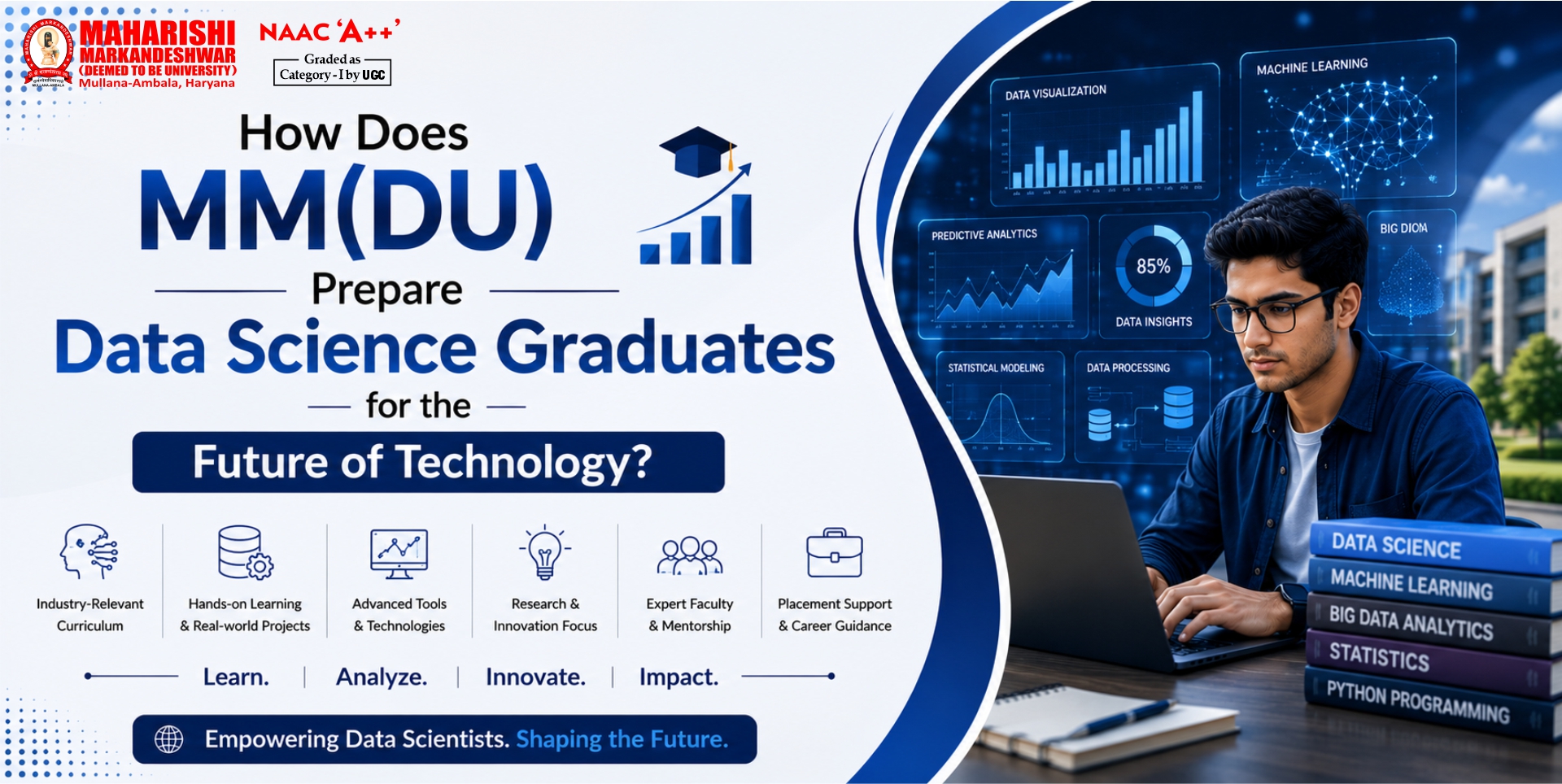
Data has become one of the most valuable resources in the modern world. Every online transaction, digital interaction, business decision, healthcare system and smart device generates information that can be analysed to identify patterns and support better decisions. As organisations increasingly rely on data, the demand for professionals who can collect, interpret, and use it effectively continues to grow.
However, a successful career in data science requires more than knowledge of programming or statistics. Students need a strong academic foundation, practical experience, analytical thinking, exposure to emerging technologies, and the ability to solve real-world problems. MM (DU), Mullana prepares students for this changing technological environment through an education that combines theoretical learning with practical application and professional development.
Building a Strong Foundation in Data Science
Data science is an interdisciplinary field that brings together computer science, mathematics, statistics, and domain knowledge. A strong understanding of these areas helps students move beyond simply using tools and enables them to understand how and why data-driven systems work.
At MM(DU), the learning journey focuses on developing this foundation while gradually introducing students to advanced concepts. Students gain exposure to programming, database systems, statistics, data structures, data analytics, machine learning, artificial intelligence, and related technologies. This combination helps them understand the complete process of working with data, from collecting and organising information to analysing it and drawing meaningful conclusions.
A structured academic approach also helps students develop logical thinking and problem-solving abilities. Rather than learning technologies in isolation, students are encouraged to understand how different concepts connect and how they can be applied to practical situations.
Learning Through Practical Application
Data science is best understood through practice. Working with real datasets often presents challenges that cannot be fully explored through textbooks alone. Data may be incomplete, unstructured, inconsistent, or too large to handle using conventional methods. Students therefore need opportunities to work with practical problems and develop solutions through experimentation.
MM(DU) places emphasis on experiential learning through laboratory sessions, projects, assignments, case studies, and practical exercises. Such activities allow students to apply classroom concepts and gain confidence in working with data.
Project-based learning also encourages students to approach problems independently. They learn how to define a problem, identify relevant data, select appropriate methods, analyse results, and communicate their findings. These experiences develop both technical competence and the ability to think critically; qualities that are essential in a rapidly changing technology industry.
Exposure to Emerging Technologies
The technology landscape is constantly evolving. Artificial intelligence, machine learning, cloud computing, automation, the Internet of Things, and advanced analytics are transforming the way industries operate. Data science lies at the centre of many of these developments.MM(DU) prepares students to understand this wider technological ecosystem. Exposure to emerging technologies helps students recognise how data science connects with other areas of computing and how these technologies work together to solve complex problems.
This broader perspective is particularly important because the roles available to data science graduates are also evolving. Professionals may work in data analytics, machine learning, business intelligence, artificial intelligence, research, software development or other technology-driven areas. By developing adaptable skills and an understanding of emerging trends, students can prepare themselves for opportunities that may continue to change throughout their careers.
An Academic Environment That Encourages Learning
The quality of a student’s education depends not only on the curriculum but also on the academic environment in which learning takes place. MM(DU) offers a multidisciplinary university ecosystem where students can interact with different fields of study and gain a broader understanding of how technology is applied across sectors.
Data science has applications in healthcare, finance, engineering, business, education, agriculture, and many other areas. A multidisciplinary environment can help students appreciate these applications and explore how data-driven solutions address challenges in different domains.
Faculty guidance also plays an important role in the learning process. Through classroom teaching, practical sessions, projects, and academic mentoring, students receive support in developing conceptual understanding and applying their knowledge. This interaction can help students identify their areas of interest and gradually build expertise in specialised fields.
Developing Skills Beyond the Classroom
Technical knowledge alone does not guarantee professional success. Data science professionals must also be able to explain complex findings clearly, work in teams, understand business requirements, and present recommendations to people who may not have a technical background.
MM(DU) recognises the importance of developing well-rounded graduates. Students have opportunities to strengthen communication, teamwork, leadership, presentation and problem-solving skills through academic activities and the wider university experience.Participation in technical events, workshops, seminars, competitions, hackathons, and collaborative projects can further encourage students to explore new ideas and learn beyond the prescribed curriculum. Such experiences help build confidence and encourage students to take initiative.
Preparing Students for Industry Expectations
The transition from university to the workplace can be challenging, particularly in a field as competitive as data science. Employers often look for candidates who combine academic knowledge with practical skills, professional confidence and the ability to adapt.
MM(DU)’s emphasis on skill development and practical exposure helps students prepare for these expectations. Projects and hands-on learning allow students to demonstrate their abilities, while career-oriented guidance can help them understand recruitment processes and workplace requirements.
The university’s placement and training ecosystem further supports students as they prepare to enter the professional world. Training in aptitude, communication, technical skills, interviewsand other areas can help students approach career opportunities with greater confidence.
Encouraging Research, Innovation and Curiosity
Data science is not a static field. New algorithms, tools, applications, and ethical questions continue to emerge. The ability to remain curious and keep learning is therefore one of the most valuable qualities a graduate can develop.
MM(DU) encourages an academic culture in which students can explore ideas, undertake projects, and develop an interest in research and innovation. Students who engage in research-oriented learning gain experience in asking meaningful questions, studying existing work, experimenting with possible solutions and evaluating results.
This approach can prepare graduates not only for employment but also for higher studies, research, entrepreneurship, and innovation-led careers.
Preparing for a Future Shaped by Data
The future of technology will increasingly depend on the ability to understand and use data responsibly. As artificial intelligence and automated systems become more widely adopted, data science graduates will need a combination of technical expertise, critical thinking, adaptability and an awareness of the wider impact of technology.
- MM(DU) prepares students for this future by providing a learning environment that brings together academic foundations, practical experience, exposure to emerging technologies, multidisciplinary learning, and professional development. The aim is not simply to teach students how to use the tools available today, but to help them develop the ability to learn, adapt and respond to the technologies of tomorrow.
- For aspiring data science professionals, this combination can provide a strong foundation for building a meaningful career in an increasingly data-driven world. By focusing on knowledge, skills, practical learning, and continuous growth, MM(DU) enables students to approach the future of technology with confidence and the ability to contribute to its development.
Visit this link for more details about courses related to Data Science, Artificial Intelligence and Machine Learning. https://www.mmumullana.org/course/BSC-in-Artificial-Intelligence-and-Machine-Learning

