

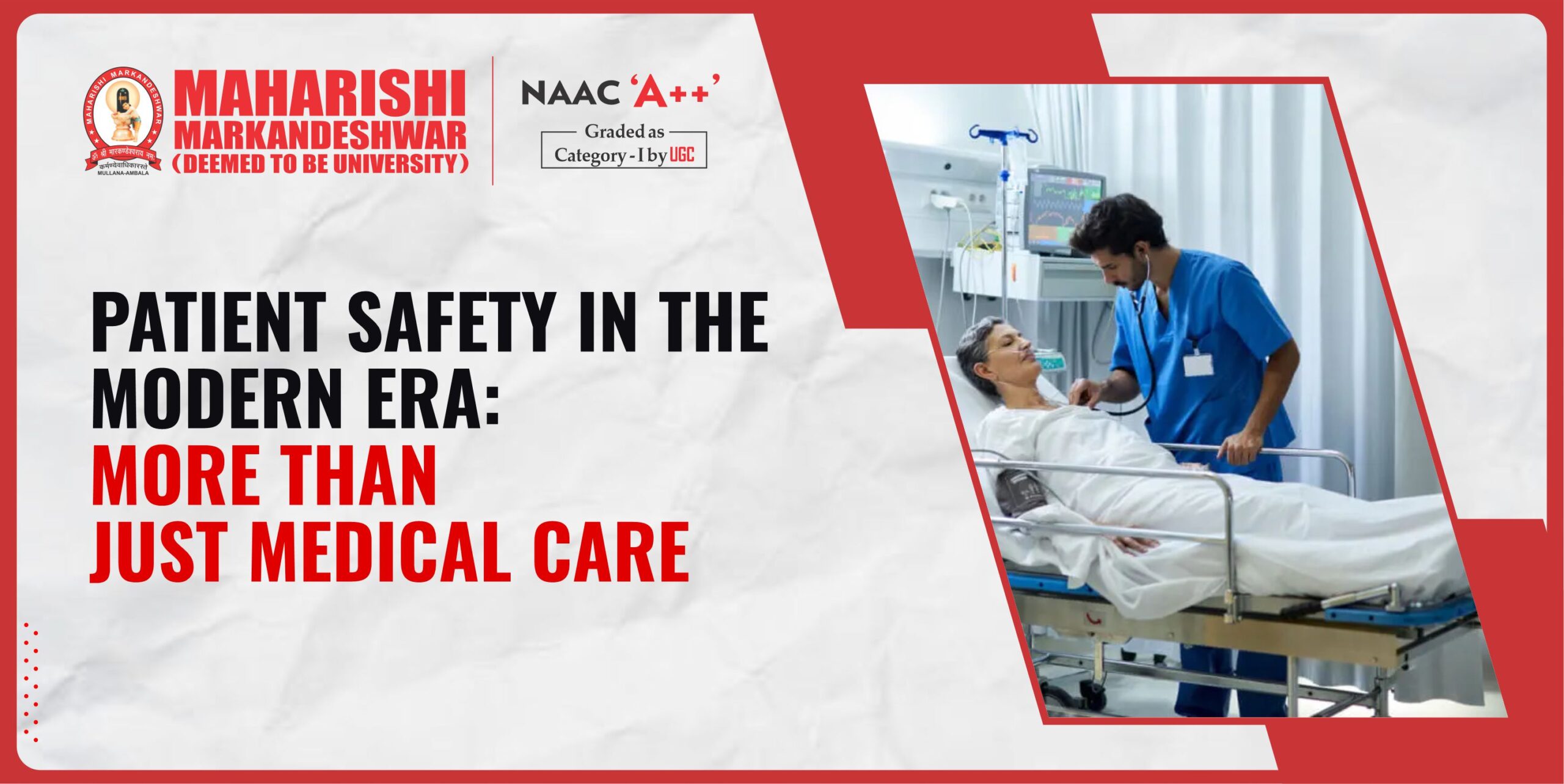
Healthcare today is not only about medicines, surgeries or advanced machines. True healthcare begins with patient safety. Every patient who enters a hospital expects respectful treatment, proper communication, cleanliness, accurate diagnosis and ethical care. In the modern era, patient safety has become one of the most important pillars of healthcare systems across the world. Institutions like MM(DU) are playing a major role in preparing future healthcare professionals who understand that caring for patients involves both medical expertise and human values. Through academic learning, clinical training, simulation labs, awareness programs and outreach initiatives such as World Patient Safety Day activities, students are taught that safety is not just a responsibility… it is a commitment.
Understanding Patient Safety
Patient safety means preventing errors and avoiding harm to patients during healthcare treatment. It includes safe medication practices, infection control, proper diagnosis, patient rights and effective communication between doctors, nurses, technicians and patients.Even a small mistake in healthcare can have serious consequences. A wrong medicine dosage, poor hygiene, lack of communication or delayed response can affect a patient’s recovery. Therefore, healthcare professionals must work carefully, ethically and compassionately.
Today’s hospitals are highly advanced, but technology alone cannot ensure patient safety. Human behaviour, teamwork, empathy and discipline are equally important.
Why Patient Safety Matters Today
Modern healthcare systems handle thousands of patients every day. Hospitals are busy environments where doctors, nurses, technicians and support staff work together under pressure. In such situations, maintaining safety standards becomes essential.
Patient safety matters because:
- It reduces medical errors
- It prevents infections and complications
- It improves trust between patients and healthcare workers
- It supports faster recovery
- It creates a positive healthcare environment
- It protects the dignity and rights of patients
Patients today are also more aware of their rights and healthcare choices. They expect transparency, privacy and proper communication from healthcare institutions.
Communication: The First Step Towards Safe Care
One of the most overlooked aspects of healthcare is communication. Many medical errors happen because of misunderstanding, incomplete instructions or lack of coordination.
Good communication includes:
- Listening carefully to patients
- Explaining diseases and treatments in simple words
- Sharing accurate patient information among healthcare teams
- Respecting patient concerns and emotions
- Providing clear discharge and medicine instructions
At MM(DU), students from Nursing, MBBS and Paramedical courses are trained to interact professionally with patients. They learn that kindness and empathy can greatly improve patient confidence and recovery.For example, a nervous patient may feel calmer when a nurse explains a procedure properly. Similarly, proper communication between doctors and nursing staff helps reduce treatment errors.
Importance of Hygiene and Infection Control
Cleanliness and hygiene are among the most important parts of patient safety. Hospitals can become places where infections spread if hygiene protocols are ignored. Basic safety measures include:
- Regular hand washing
- Sanitization of equipment
- Use of gloves and masks
- Proper disposal of medical waste
- Maintaining clean wards and operation theatres
COVID-19 pandemic further highlighted the importance of infection control. Healthcare professionals became frontline protectors and strict hygiene practices saved countless lives.
Students at MM(DU) receive practical training in infection prevention and hospital hygiene protocols. Through clinical postings and laboratory sessions, they understand how disciplined hygiene practices protect both patients and healthcare workers.
Respecting Patient Rights and Ethics
Healthcare is not only a scientific profession but also an ethical responsibility. Every patient deserves respect, privacy and fair treatment.Patient rights include:
- Right to information
- Right to consent before treatment
- Right to privacy and confidentiality
- Right to respectful treatment
- Right to ask questions regarding treatment
Medical ethics teach healthcare professionals to act honestly, responsibly and compassionately. A patient should never feel ignored or disrespected in a hospital setting.At MM(DU), ethical healthcare practices are integrated into academic and clinical learning. Students are encouraged to understand the emotional and psychological needs of patients along with physical treatment.
Role of Nursing Professionals in Patient Safety
Nurses are often the closest caregivers to patients. They monitor patient conditions, administer medicines, assist in treatments and provide emotional support.Therefore, nursing professionals play a central role in patient safety. Their responsibilities include:
- Monitoring vital signs
- Preventing medication errors
- Maintaining hygiene standards
- Supporting patient comfort
- Reporting emergencies quickly
Nursing programs at MM(DU) focus not only on clinical excellence but also on patient-centred care. Students are trained in communication skills, emergency response, ethics, and compassionate caregiving.This holistic approach helps future nurses become confident healthcare professionals who understand the true meaning of safe patient care.
Medical Education Beyond Textbooks
Modern medical education is changing rapidly. Students today must learn more than anatomy, pharmacology or surgical procedures. They must also understand teamwork, empathy, leadership and patient psychology.Healthcare professionals often work in stressful environments where quick decisions are required. Proper training helps students handle pressure responsibly while maintaining patient safety standards.
At MM(DU), students gain exposure through:
- Clinical rotations
- Simulation-based learning
- Hospital training
- Workshops and awareness drives
- Community outreach programs
- Patient interaction exercises
These experiences prepare students for real-world healthcare situations.
Role of Paramedical Professionals
Paramedical professionals are another important part of the healthcare system. Lab technicians, radiology experts, physiotherapists, operation theatre technicians and emergency care professionals contribute directly to patient safety.Accurate lab reports, safe imaging procedures and timely emergency support are essential for correct treatment. A small mistake in diagnostics can affect an entire treatment plan.Paramedical courses at MM(DU) help students develop technical expertise along with discipline and responsibility. Students are trained to follow protocols carefully and maintain professional ethics in healthcare environments.
Technology and Patient Safety
Technology has improved healthcare in many ways. Digital records, advanced monitoring systems, robotic surgeries and telemedicine have increased efficiency and reduced certain risks.However, technology should support human care, not replace it. Doctors and nurses must still communicate properly, verify information and make ethical decisions.Healthcare students must therefore learn to balance technology with compassion. Institutions like MM(DU) encourage students to use modern medical tools responsibly while keeping patient well-being at the centre of care.
Building a Culture of Safety
Patient safety is not the responsibility of one doctor or nurse alone. It requires teamwork across the entire healthcare system.A culture of safety means:
- Encouraging honesty and accountability
- Reporting mistakes without fear
- Continuous learning and training
- Supporting teamwork and coordination
- Putting patients first in every decision
Educational institutions have a major role in building this culture among future healthcare professionals.Through awareness campaigns, workshops, and practical learning experiences, MM (DU) is helping students understand that healthcare is ultimately about protecting human life with skill, compassion and responsibility.
Patient safety in the modern era goes far beyond medical treatment. It includes communication, hygiene, ethics, empathy, teamwork and respect for patient rights. Healthcare professionals must not only cure diseases but also create a safe and supportive environment for every patient.As the healthcare sector continues to evolve, institutions like MM(DU) are preparing future doctors, nurses, and paramedical professionals to meet these responsibilities with confidence and compassion.
Visit this link for more details about courses related to patient safety.

