

India stands at a defining crossroads. As the nation moves toward completing 100 years of independence in 2047, agriculture, its oldest and most vital sector is undergoing a powerful transformation. No longer confined to traditional practices, Indian farming is steadily evolving into a dynamic, technology-driven, and globally competitive ecosystem. The recent expert talks hosted at MM(DU) on “Indian Agriculture – Vision 2047” brought this transformation into sharp focus, positioning the university as a catalyst in shaping the future of agricultural excellence.
For decades, Indian agriculture has been rooted in resiliencefeeding a population of over a billion despite challenges such as fragmented landholdings, climate variability and resource constraints. However, the future demands more than resilience; it demands innovation, intelligence, and sustainability. This is where the concept of “smart farming” emerges as the cornerstone of Vision 2047.
From Traditional Fields to Smart Farms
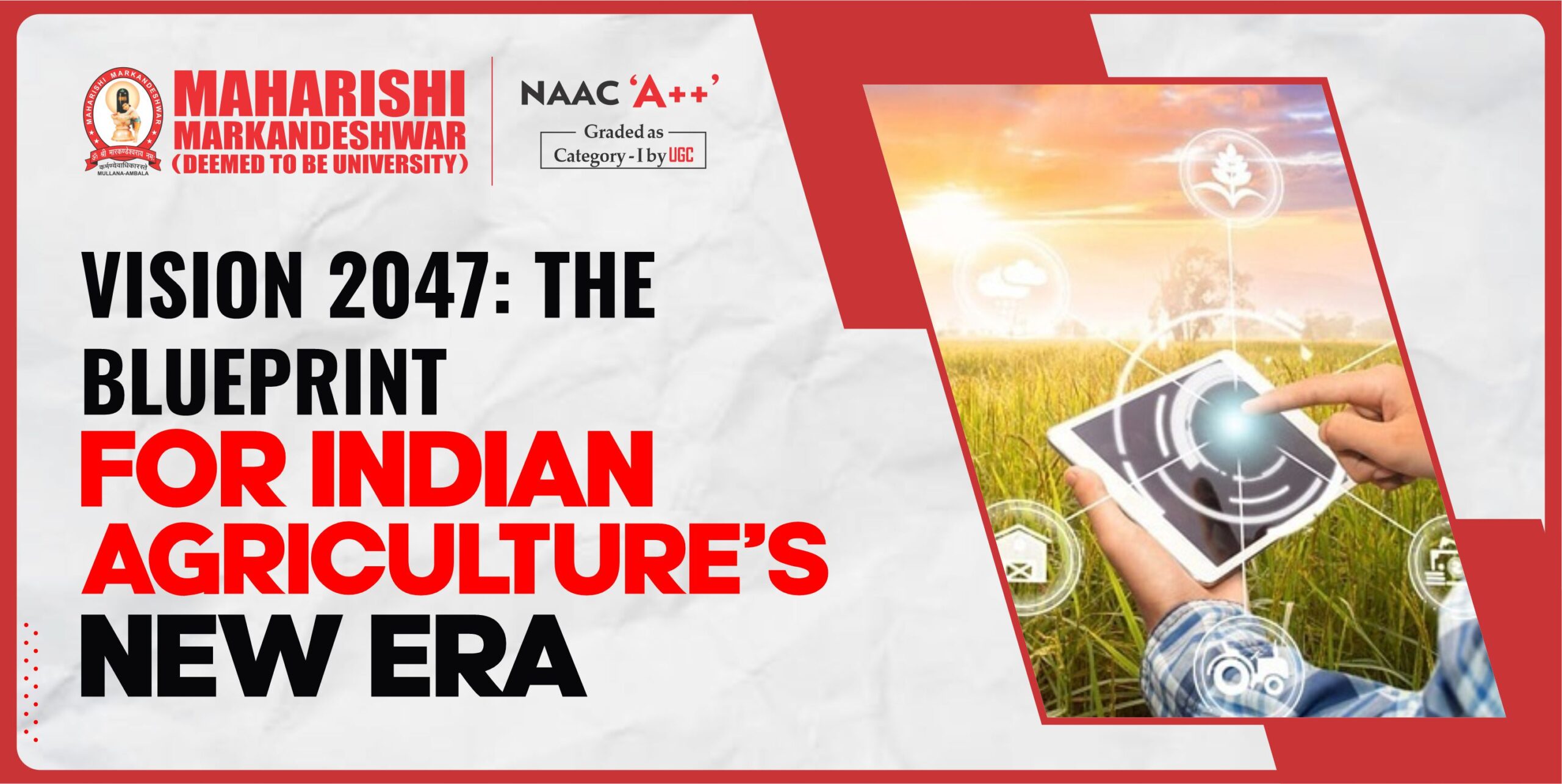
Smart farming represents the integration of modern technologies like artificial intelligence, Internet of Things (IoT), drone-based monitoring and data analytics into agricultural practices. It transforms farming from a labour-intensive activity into a precision-driven enterprise. Sensors in soil can now inform farmers about moisture levels, drones can assess crop health in real time and AI tools can predict pest outbreaks before they occur.
For students pursuing B.Sc. Agriculture, this shift is not just a technological upgrade; it is a complete redefinition of their future roles. The farmer of tomorrow is not merely a cultivator but a data-driven decision-maker, an agri-entrepreneur and a sustainability advocate. Institutions like MM(DU) are playing a critical role in preparing students to lead this transition by combining academic knowledge with practical exposure and innovation-led thinking.
Climate-Resilient Agriculture: A National Priority
One of the most pressing challenges facing Indian agriculture is climate change. Erratic rainfall, rising temperatures and increasing frequency of extreme weather events threaten crop productivity and food security. Vision 2047 recognizes the urgent need to develop and adopt climate-resilient crops and practices.
This includes drought-resistant seeds, flood-tolerant rice varieties and heat-resilient wheat strains. It also emphasizes sustainable farming techniques such as crop diversification, conservation agriculture and efficient water management systems like drip irrigation. By reducing dependency on unpredictable climatic conditions, these innovations aim to ensure stability in agricultural output.
MM(DU), through its academic initiatives and expert engagements, is encouraging students to think beyond conventional farming and explore solutions that align with environmental sustainability. The focus is not just on increasing yield but on ensuring that growth is sustainable, inclusive, and future-ready.
The Rise of Rural Entrepreneurship
Agriculture in 2047 will not just be about production; it will be about value creation. Rural entrepreneurship is set to become a powerful driver of economic growth, with opportunities spanning agri-processing, supply chain management, organic farming, agri-tourism and digital agri-services.
Young graduates today have the potential to become job creators rather than job seekers. With the right skills and mindset, they can build startups that bridge the gap between farm and market, reduce post-harvest losses and enhance farmer incomes. The integration of e-commerce platforms and digital marketplaces is already enabling farmers to access wider markets and better pricing.
MM(DU)’s emphasis on interdisciplinary learning equips students with not only agricultural expertise but also business acumen, enabling them to tap into these emerging opportunities. The university’s vision aligns closely with national goals of doubling farmer income and promoting self-reliant rural economies.
Youth as the Architects of Agricultural Transformation
The success of Vision 2047 hinges largely on the energy, creativity, and commitment of India’s youth. With a significant portion of the population under the age of 30, the country has a demographic advantage that can be leveraged to revolutionize agriculture.
However, attracting youth to agriculture requires changing perceptions. Farming must be seen as a profitable, innovative, and respectable career choice. Exposure to modern technologies, success stories of agri-entrepreneurs, and access to institutional support can play a crucial role in this transformation.
MM(DU) is actively contributing to this shift by creating an ecosystem that nurtures curiosity, innovation, and leadership among students. Through expert talks, hands-on training and research opportunities, the university is inspiring young minds to view agriculture as a field of limitless possibilities.
The B.Sc. Agriculture program at MM(DU) is designed to prepare future-ready agri-professionals with a strong blend of scientific knowledge and practical exposure. The curriculum covers key areas such as agronomy, soil science, plant breeding, horticulture and agricultural economics, while integrating modern concepts like smart farming and sustainable agriculture. With well-equipped labs, experimental farms and expert faculty, students gain hands-on learning and industry insights. The program also encourages innovation and entrepreneurship, enabling graduates to explore careers in agribusiness, research and rural development, making them capable contributors to India’s agricultural growth and Vision 2047. You can explore this link to get more details about the course, eligibility criteria and admission process.
The Road Ahead
Vision 2047 is not a distant dream; it is a roadmap that begins today. The transformation of Indian agriculture will require continuous innovation, strong institutional support and a collective commitment from all stakeholders.
For students of B.Sc. Agriculture and aspiring rural entrepreneurs, this is a moment of immense opportunity. The sector is evolving rapidly, offering diverse career paths that combine technology, sustainability, and entrepreneurship.
MM(DU), through its forward-thinking approach and commitment to excellence, is empowering students to be at the forefront of this transformation. By fostering a culture of learning, innovation and responsibility, the university is shaping the future of Indian agriculture.
As India marches toward 2047, one thing is clear: the fields of tomorrow will not just grow crops; they will cultivate innovation, sustainability, and prosperity. And the seeds of this transformation are being sown today, in classrooms, research labs and visionary institutions like MM(DU).

